
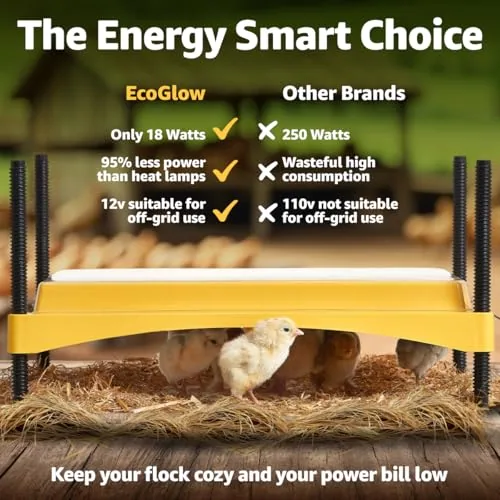
- Brinsea rates it for up to 35 newly hatched chicks, or 20–25 older chicks, depending on age and size.
- 18 W, 12 V low-voltage operation from a mains transformer, with a 10 ft lead.
- No light: chicks keep a natural day and night cycle.
- Indoor only; Brinsea says the room should not drop below 50°F.
- Start about 3 in high for standard chicks and adjust by behavior (Brinsea).
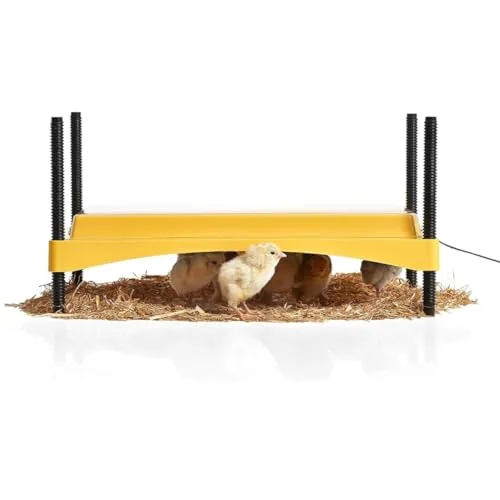
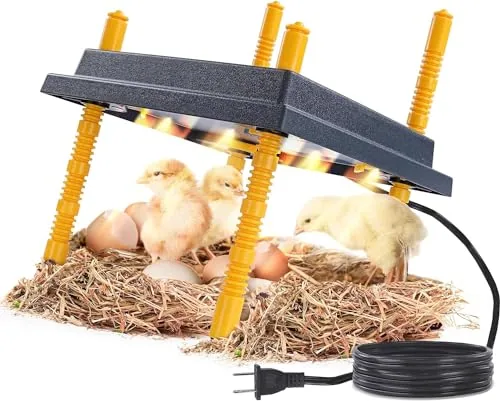
This Brinsea EcoGlow review covers the EcoGlow Safety 1200 (model USHD612C), the larger of Brinsea’s two current EcoGlow brooders. The smaller Safety 600 is rated for about 20 chicks at 12 W. Both use the same idea: a radiant panel on legs that chicks press up under, the way they would under a broody hen.
We wrote this review from Brinsea’s product page and EcoGlow usage guide, the listing, Penn State Extension’s brooding guidance and fire-marshal advice on heat lamps. We did not brood chicks under it. Follow the manual in your box first.
Who it’s for, and who should skip it
- Are brooding up to about 35 chicks indoors, in a room that stays above 50°F
- Want to avoid a heat lamp and its fire risk in a house, mudroom or classroom
- Like that there is no light, so chicks sleep at night
- Brood ducklings, goslings or quail as well as chicks (the listing names all four)
- Want a low-power heat source that runs for weeks on 18 W
- Brood in an unheated garage, shed or barn where nights drop below 50°F
- Brood more than about 20–25 older chicks at once without adding a second plate
- Want a digital thermostat or a temperature readout on the plate
- Need a coop heater for adult hens (this is a chick brooder)
Pros and cons
- Low-voltage 12 V operation and only 18 W, per Brinsea
- Rated for up to 35 newly hatched chicks
- No light, so chicks keep a natural day and night rhythm
- Four screw-on legs adjust height and angle for mixed sizes
- Clear plastic cover makes cleaning quicker
- 10 ft power lead and a connection indicator light
- Three-year warranty subject to registration
- Indoor use only; the room must stay above 50°F
- Warms chicks, not the air, so drafty spaces work against it
- No thermostat or temperature display on the plate
- Capacity drops to 20–25 as chicks grow
- A low, small plate means you must keep raising the legs as chicks grow
Specs
| Wattage | 18 W, low voltage |
|---|---|
| Chicks capacity | Up to 35 newly hatched or 20 older chicks |
| Height adjustment | Screw-on legs, height and angle |
| Cord | 10 ft |
As stated by the maker or seller; confirm on the listing before you buy.
How does the EcoGlow heat plate warm chicks?
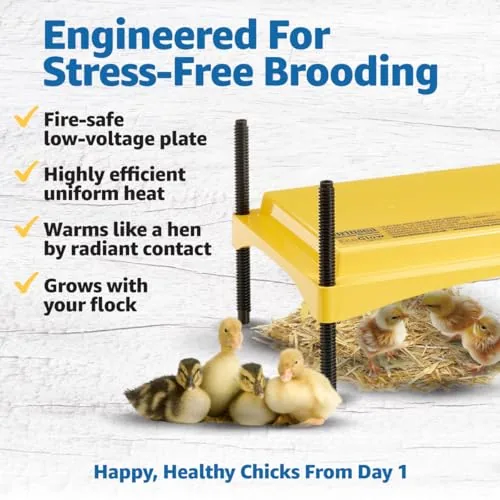
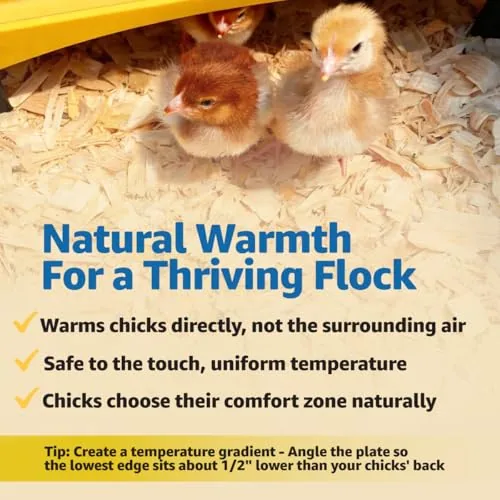
A heat lamp warms the air and everything under it. A heat plate like the EcoGlow warms the chicks directly: they huddle under a warm panel and press their backs against it, the way they would under a hen. Because they choose when to go under and when to come out to eat and drink, there is no single air temperature to hit. Brinsea says chick behavior is the best guide. Huddling and peeping mean too cold, so lower the plate. Panting or avoiding the plate means too warm, so raise it.
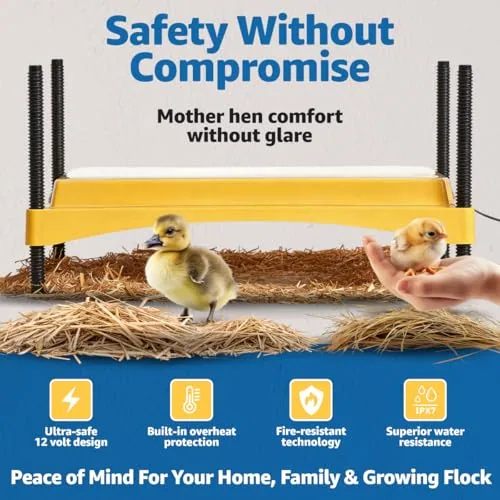
The Safety 1200 runs at 12 V from a transformer and draws 18 W. Brinsea compares that with about 250 W for most heat lamps. Its metal plate is meant to even out hot and cold spots, and the ABS body comes with a clear cover that lifts off for cleaning.
Power draw: EcoGlow plates vs a typical heat lamp
Watts, as published by Brinsea
Setting up a brooder with the EcoGlow Safety 1200
- Warm the room first
Brinsea says indoor use only and a room no colder than 50°F. A heated utility room or spare room beats a garage.
- Build a draft-free corner
Place the plate against a wall to cut drafts. Brinsea suggests about 1 in of Styrofoam under the brooder floor to limit heat loss.
- Set the starting height
Brinsea suggests about 3 in for standard chicks. For mixed sizes, set one end lower than the other.
- Leave room to move away
Chicks must be able to move freely between the plate, feed and water. Brinsea advises no more than four EcoGlow units side by side.
- Watch and adjust
Lower the plate if chicks huddle and peep, raise it if they pant. Raise the legs as they grow.
- Wean off heat
Penn State’s schedule drops week by week to room temperature at about 8 weeks. Raise the plate until chicks stop using it.
Brooder temperature at chick level, under the heat source
| Chick age | °F | °C | Floor space per chick |
|---|---|---|---|
| Week 1 | 92–95°F | 33–35°C | ¼ sq ft |
| Weeks 2–3 | 85–90°F | 29–32°C | ½ sq ft |
| Weeks 3–5 | 80–85°F | 27–29°C | ¾ sq ft |
| Weeks 5–8 | 70–80°F | 21–27°C | 1 sq ft |
| Week 8 on | Room temperature | — | 1½ sq ft, more for large breeds |
Source: Penn State Extension, Brooding of Domestic Fowl. Watch the chicks too: huddled under the heat means cold, crowded at the edges means too hot.
The Penn State numbers are air temperatures at chick level, written for lamp or room heat. Under a plate, they help you judge the room and your weaning schedule. Our brooder temperature chart highlights the week your chicks are in and checks your plate’s listed chick capacity against your brood size.
Heat plate vs heat lamp: the fire-safety case
Heat lamps cause coop and garage fires every winter and spring. A bulb pulls loose, falls into shavings, or a clamp slips. That is the main reason extension services and fire marshals push heat plates for small flocks. The EcoGlow has no bulb, low voltage and low wattage, which removes the usual fire paths. It still needs a sound cord and outlet, and it should sit on a stable floor.
For more, see heat lamp fire safety and our heat plate vs heat lamp comparison.
How many chicks can share one EcoGlow?
Brinsea rates the Safety 1200 for up to 35 newly hatched chicks, or 20 older chicks. Plan around the lower figure. Chicks double in size within weeks, and the plate has to cover all of them at once on a cool night. If you hatched three dozen eggs in a large incubator, a second plate or the larger RentACoop and K&H plates below will keep everyone covered as they grow. Floor space matters too. Penn State gives ¼ sq ft per chick in week 1, rising to 1 sq ft by weeks 5–8. See how to set up a brooder for layouts.
Hygiene: chicks, the brooder and Salmonella
Unplug the transformer before cleaning, lift off the clear cover, and wipe or wash it per the manual. Keep water away from the electrical connections. Our week-by-week guide to raising baby chicks covers feed, water and bedding. The chicks and brooding hub and the first flock hub list feeders, waterers and bedding to go with it.
Alternatives worth a look
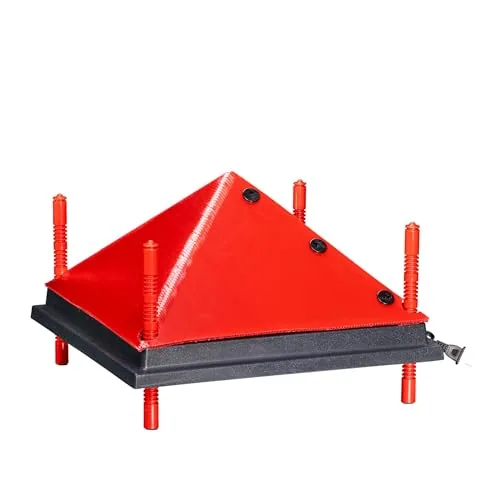
RentACoop 16x16 Heating Plate, Up to 30 Chicks
- Chicks
- Up to 30 chicks
- Heated area
- 16 x 16 in
- Wattage
- 42 W
Best for Larger brooder batches
Why consider it: RentACoop’s 16 × 16 in plate draws 42 W, adjusts through 25 settings from 1 to 7 in, tilts, and is listed for up to 30 chicks.
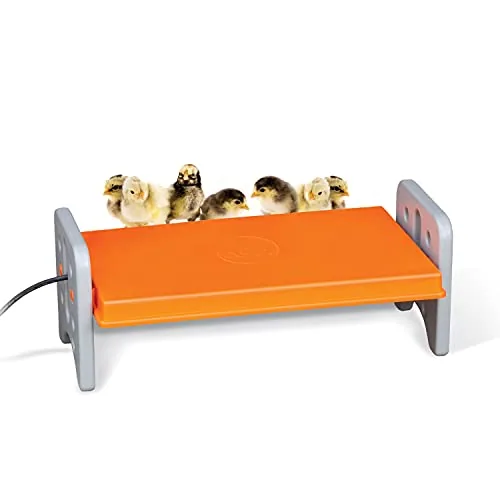
K&H Thermo-Poultry Brooder Plate, Large 40W
- Chicks
- Up to 30 newborn chicks (fewer as they grow)
- Heated area
- 20 x 11.5 x 8 in
- Wattage
- 40 W
Best for Medium chick batches
Why consider it: K&H’s large 40 W plate is listed for up to 30 newborn chicks, with a pegged adjustable shelf and MET Labs certification.
Premier 1 Chick Heating Plate 12x12, 20 Chicks
- Chicks
- Up to 20 chicks
- Heated area
- 12 x 12 in
- Wattage
- 22 W
Best for Home batches up to 20
Smaller batch: Premier 1’s 12 × 12 in plate draws 22 W, has 1.5–6 in legs and is listed for up to 20 chicks.
We read the maker’s specs, manual and the current listing, and checked them against extension, CDC, USDA and FDA guidance where it applies. We did not hatch eggs in, house birds in, install or lab-test this product. We never show scores, star ratings or prices.
Questions
How many chicks can the Brinsea EcoGlow Safety 1200 brood?
Can I use a Brinsea EcoGlow in a garage or barn?
How high should I set the EcoGlow brooder?
Is a heat plate safer than a heat lamp?
How long do chicks need the EcoGlow?
Can ducklings use the EcoGlow Safety 1200?
Sources
- Brinsea, EcoGlow Safety 1200 Chick Brooder product page
- Brinsea, Getting the best out of your EcoGlow brooder
- Penn State Extension, Brooding of Domestic Fowl
- University of Minnesota Extension, Caring for chickens in cold weather
- Clark County (WA) Fire Marshal, Safety tips to prevent a chicken coop fire
- CDC, Backyard Poultry